
Fort Leonard Wood opens new incident response training department
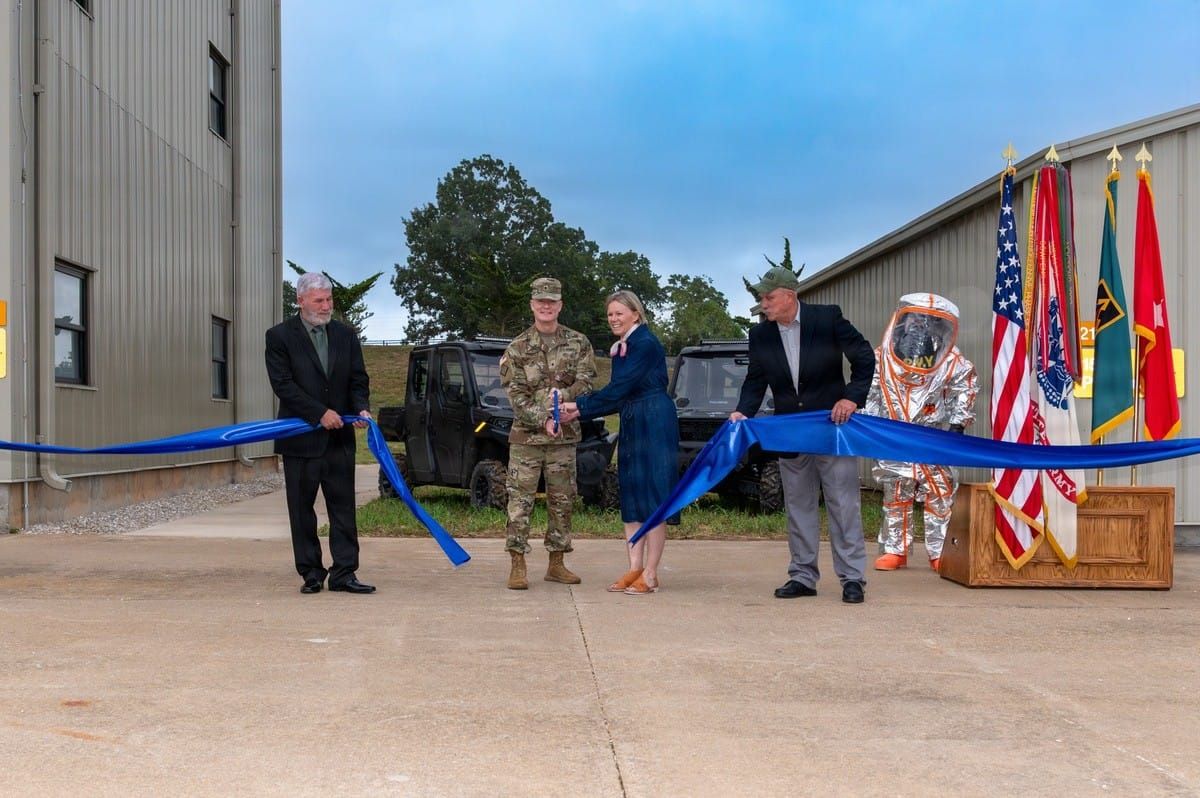
The Homeland Defense Civil Support Office at Fort Leonard Wood in Missouri, USA, officially opened its newly upgraded incident response training department on 22 September 2026.
"Fort Leonard Wood is the heart of the CBRN Response Enterprise mission’s individual training in support of its technical support forces," said Catherine Krakuszeski, Homeland Defense Civil Support Office director, Maneuver Support Center of Excellence. "By developing and commissioning these premier, state-of-the-art training venues, we are not just leading, we are setting the standard for CBRN Response Enterprise training."
Three buildings at the 1st Lt. Joseph Terry CBRN Response Training Facility have been transformed into high-fidelity training environments, immersing hazardous materials first responders in realistic, complex CBRN and weapons of mass destruction incident scenarios, according to an article published by US Army.
"These state-of-the-art venues include a three-story tactical target building, a two-story training complex, and a single-story training hub that are critical to our nation's readiness," Krakuszeski said. "They provide the realistic, advanced training environments needed to prepare the nation's CBRN Response Enterprise forces for their mission."
During his remarks as keynote speaker at the ribbon cutting ceremony, Lovasz said he remembered when the 1st Lt. Joseph Terry CBRN Response Training Facility was built.
Michael Schmitz, Incident Response instructor, Civil Support Skills Course, Homeland Defense Civil Support Office, said the target-sites support the department's responders at operations and technician-level training, “"including the Civil Support Skills Course, CBRN Response Enterprise Basic and Advanced, Mass Casualty Decontamination and other hazardous material and CBRN technical training."
“These facilities can be used at different levels of complexity, varying from team skills all the way up to full-mission scenarios, dependent on training needs and student capabilities,” Schmitz added.