Fiber Optic FPV drones emerge on African battlefields
This article was originally published on 29 August 2025 on Military Africa. Red H#sh Magazine is reposting on 11 August 2026 at the request of a reader. The original article can be read here.
In the Democratic Republic of Congo (DRC), this innovation arrives amid one of the region’s most protracted and lethal conflicts. The M23, supported by Rwanda, clashes with a coalition of government forces and allied militias, with fighting fuelled by access to mineral resources and ethnic tensions. Both sides have ramped up their arsenals, incorporating drones to extend their reach.
The DRC government has procured unmanned systems from suppliers in Bulgaria, China, and Turkey, including six CH-4 combat drones and the much larger Wing Loong II MALE drones from China. These fixed-wing platforms can deploy bombs or missiles, bolstering aerial strike capabilities. Accusations fly between combatants, with each claiming the other targets civilian areas with drone attacks, heightening fears of a broader regional escalation involving neighbouring states.
On the other hand, Rwanda operates a Polish counter-UAV system. The African country is to acquire the SKYctrl and FIELDctrl anti-drone systems from the Polish company Advanced Protection Systems. The systems are designed to detect, track and neutralise unmanned aerial vehicles that pose a threat to the security and sovereignty of the country.
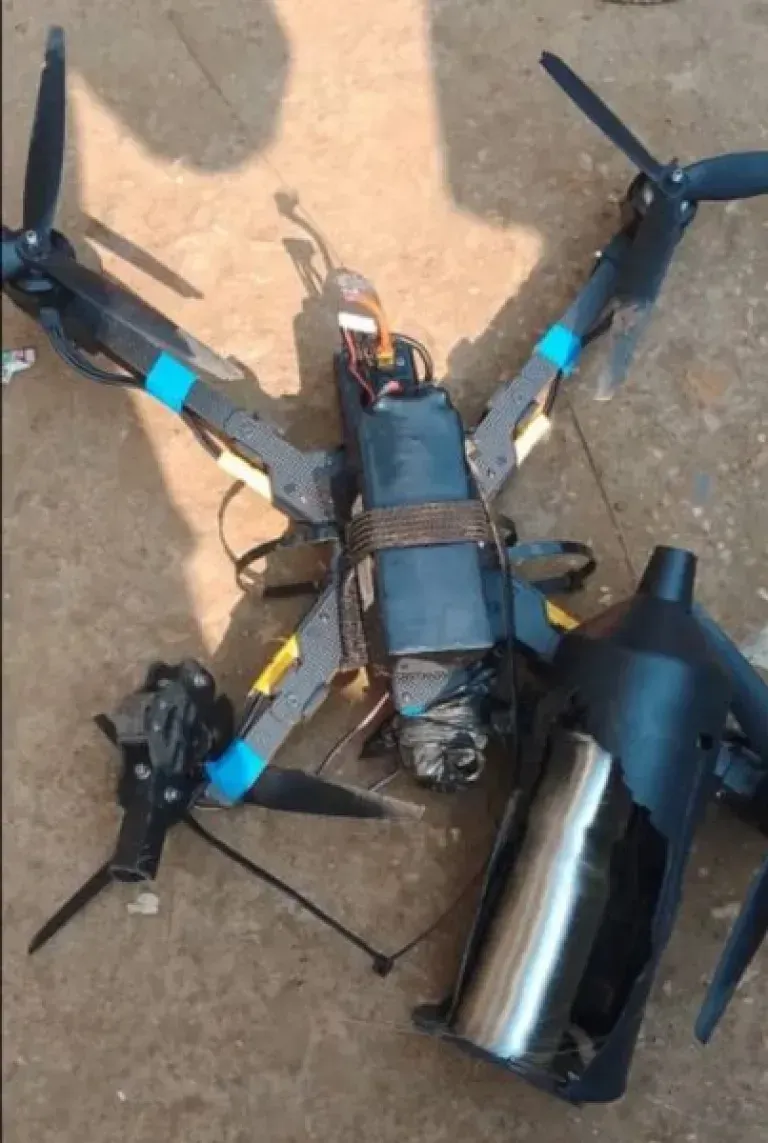
The adoption of fibre-optic FPVs by M23 signifies a tactical adaptation to FARDC’s growing electronic defences. If rebels resort to tethered drones, it implies that standard FPVs face effective jamming, a capability the Congolese military has not previously demonstrated at scale. This evolution reflects a broader trend across Africa, where drone warfare spreads from state militaries to non-state actors. Insurgent groups leverage these tools for reconnaissance, propaganda dissemination, and precision strikes, often at a fraction of the cost of manned aircraft.
Beyond the DRC, similar adaptations appear in other hotspots. In the Sahel, groups like the Front for the Liberation of Azawad and the Jama’at Nasr al-Islam wal Muslimin employ drones against security forces equipped with jammers. Tuareg fighters have used fibre-optic variants in ambushes on the African Corps, a Wagner Group successor operating in the region, where electronic warfare disrupts conventional operations. In Somalia, Al-Shabaab integrates drones into its asymmetric campaigns, exploiting the technology’s low entry barriers to challenge better-resourced opponents. Likewise, the Islamic State in Mozambique and Allied Democratic Forces in the Democratic Republic of Congo, as well as the Rapid Support Force in Sudan, have used commercially available drones in their operations.