DEVCOM CBC hosts field experiment for emerging biotech defence
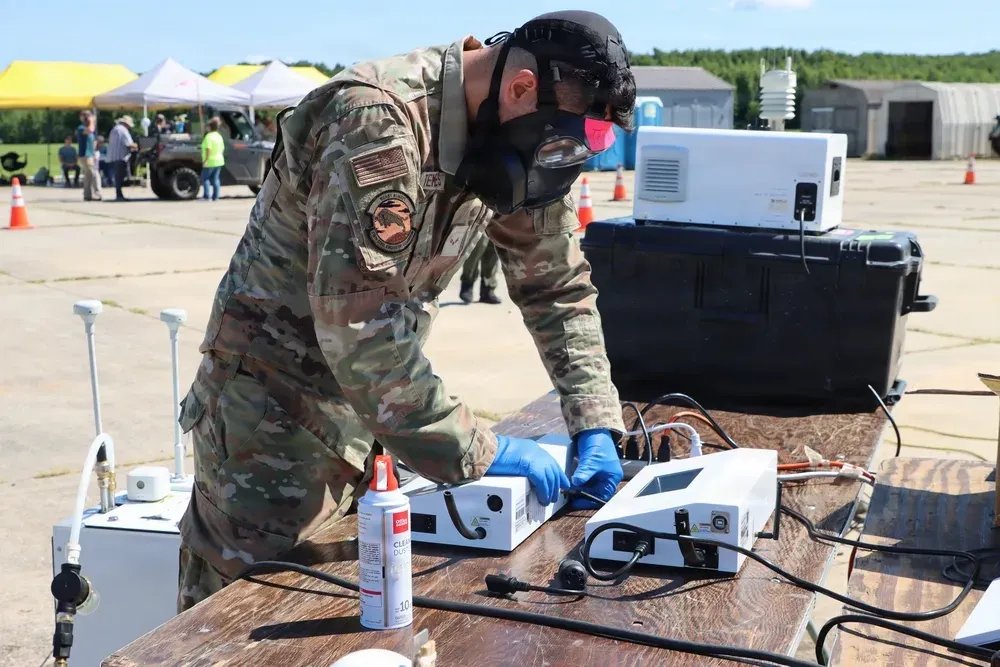
The US Army Combat Capabilities Development Command Chemical Biological Center (DEVCOM CBC) hosted a field experiment 21-25 July to assess emerging environmental air monitoring and biodefence technologies.
The Defense Threat Reduction Agency (DTRA) Joint Science and Technology Office sponsored the field experiment event, which was known as the Micro-S&T CBRN-Capability Operational User Trial.
According to information published by DVIDS, the field experiment was designed to support strategic goals to shorten acquisition timelines, prioritising rapid technology delivery and immediate battlefield utility. One primary area of focus at Micro-SCOUT was evaluating available commercial off-the shelf environmental air samplers and bio-detectors for warfighters.
Micro-SCOUT put this feedback into action by letting warfighters get hands-on experience with next-generation environmental air samplers and bio detectors. "Personnel had the unique opportunity to learn, observe, and actively test these critical systems in real-world scenarios," DVIDS wrote.
"The feedback gathered during these evaluations allows engineers and developers to modify, upgrade, and reinforce these commercial capabilities to meet the precise, highly demanding operational requirements of the warfighter.
Joshua Schulte, a computer engineer at DEVCOM CBC, observed firsthand how quickly the participants adapted to the systems. "We definitely saw the warfighters' lightbulbs come on with the tech," Schulte said. "We had a very imaginative group who were quick learners. The training phase got a lot of good feedback but actually having them operate the equipment in the field really made things click for them."